Getting your first IT job after graduation can feel challenging, especially when job descriptions ask for technical skills, practical experience, and sometimes even previous work experience. However, fresh graduates can build a strong profile by following a clear preparation strategy.
Whether you have completed BCA, B.Tech, B.Sc. Computer Science, MCA, or another technology-related degree, you do not need to master every programming language to begin your career. You need to choose a suitable career path, develop relevant skills, demonstrate what you can do, and prepare for interviews.
This guide explains how freshers can prepare for IT jobs in 2027, from choosing a specialization to applying for entry-level positions.
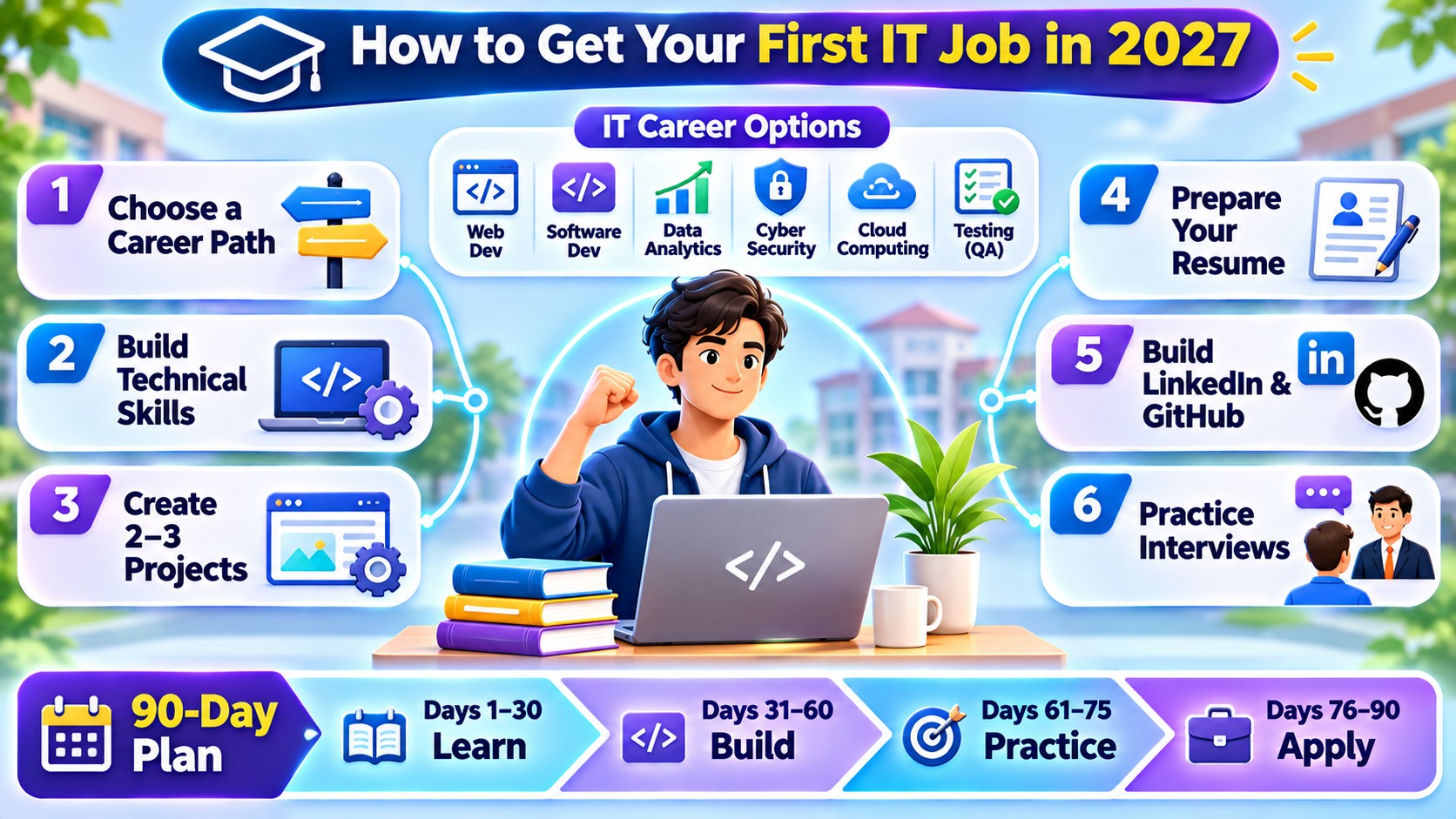
1. Choose the Right IT Career Path
The IT industry includes several career options. Before learning random technologies, identify the type of work that interests you. Your choice will help you decide which skills and projects deserve your attention.
| Career Path | Skills to Learn | Common Entry-Level Roles |
|---|---|---|
| Web Development | HTML, CSS, JavaScript, React, backend basics | Junior Web Developer, Frontend Developer |
| Software Development | Java, Python, C++, programming fundamentals | Software Developer, Junior Programmer |
| Data Analytics | Excel, SQL, Python, Power BI | Data Analyst Trainee, Junior Data Analyst |
| Cybersecurity | Networking, Linux, security fundamentals | Security Analyst Trainee, SOC Analyst |
| Cloud Computing | Linux, networking, cloud platform fundamentals | Cloud Support Associate, Technical Support Engineer |
| Software Testing | Manual testing, test cases, SQL, automation basics | QA Tester, Software Test Engineer |
You do not need to learn all these areas. Select one primary career path and focus on the skills commonly required for its entry-level roles.
2. Build Strong Technical Fundamentals
Technical fundamentals help you understand problems instead of simply memorizing solutions. Employers may evaluate these fundamentals through coding tests, technical interviews, or practical assignments.
Start with the skills relevant to your chosen role:
- Programming: Learn one language properly, such as Python, Java, or JavaScript.
- Data structures: Understand arrays, strings, linked lists, stacks, queues, searching, and sorting.
- Database concepts: Practice SQL queries, joins, filtering, grouping, and basic database design.
- Computer fundamentals: Study operating systems, computer networks, and basic software engineering concepts.
- Problem-solving: Practice breaking complex problems into smaller steps and explaining your approach.
For roles that do not require extensive programming, prioritize the technical knowledge listed in relevant job descriptions rather than studying unrelated subjects.
3. Create Practical Projects for Your Resume
A degree shows your educational background, but projects help demonstrate how you apply your knowledge. Even without professional experience, you can build a portfolio that gives recruiters something concrete to evaluate.
Choose two or three projects that match your target job. For example:
- Web developer: Build a responsive portfolio website, task management application, or online booking system.
- Python developer: Create an expense tracker, file management tool, or automated reporting application.
- Data analyst: Analyze a public dataset and create an interactive dashboard with meaningful findings.
- Cybersecurity learner: Create a home lab to practice network monitoring and document security exercises in an authorized environment.
- Software tester: Prepare test cases for a sample application and demonstrate how you identify and document defects.
For every project, explain its purpose, technologies, important features, and your individual contribution. Upload suitable code to GitHub and include a clear README file with setup instructions and screenshots where useful.
4. Prepare a Professional Fresher Resume
Your resume should quickly communicate your education, skills, projects, and achievements. Recruiters often review many applications, so keep the document clear and relevant to the position.
A fresher resume can include these sections:
- Contact information: Your name, professional email address, phone number, and relevant profile links.
- Career summary: A short introduction describing your background and target role.
- Technical skills: Languages, frameworks, tools, and technologies you can genuinely use.
- Projects: Two or three relevant projects with your contribution and technologies.
- Education: Degree, institution, graduation year, and relevant academic details.
- Certifications and achievements: Include relevant courses, certifications, hackathons, or competitions.
Customize your resume for each job category. For example, a data analyst resume should highlight SQL, Excel, dashboards, and analytical projects rather than unrelated web development skills.
5. Build Your Online Professional Presence
Recruiters may review your online profiles before contacting you. Make sure your professional information is accurate and consistent.
- LinkedIn: Create a complete profile with your education, skills, projects, and career interests.
- GitHub: Upload projects with readable code, useful descriptions, and proper documentation.
- Portfolio website: Display your best work, resume, contact details, and project demonstrations.
- Professional communication: Use a suitable profile photograph, clear descriptions, and a professional email address.
You do not need to maintain every platform. Focus on the platforms that support your target role and keep them updated.
6. Apply for Fresher Jobs and Internships
Once your resume and basic portfolio are ready, start applying. Do not wait until you feel completely prepared. Entry-level opportunities can help you gain practical experience and understand workplace expectations.
Explore opportunities through company career pages, professional networking platforms, campus placement drives, and established job portals.
Search using relevant job titles, such as:
- Graduate Engineer Trainee
- Software Developer Trainee
- Junior Web Developer
- IT Support Associate
- QA Engineer Trainee
- Data Analyst Intern
- Technical Support Engineer
Read each job description carefully and apply when your skills reasonably match the requirements. Keep a simple application tracker with company names, job titles, application dates, and follow-up status.
7. Prepare for IT Interviews
Interview preparation should cover technical knowledge as well as communication. A fresher interview may include an aptitude assessment, coding round, technical discussion, practical task, or HR conversation.
Technical preparation
- Revise your primary programming language and important concepts.
- Practice common coding problems involving arrays, strings, loops, and functions.
- Understand SQL queries and basic database concepts if relevant to your role.
- Revise your academic subjects and be ready to explain your projects.
HR preparation
- Prepare a clear introduction about yourself.
- Explain why you selected your career path.
- Discuss your strengths, learning goals, and project experience.
- Practice answering questions about teamwork, challenges, and problem-solving.
Speak honestly about what you know and what you are still learning. Clear communication is more useful than pretending to have experience you do not possess.
8. Follow a Practical 90-Day Job Preparation Plan
A structured schedule can help you prepare without becoming overwhelmed. Adjust this plan according to your current knowledge and the requirements of your chosen career path.
| Time Period | Main Focus | Expected Progress |
|---|---|---|
| Days 1–30 | Choose a career path and learn core technical skills. | Understand the fundamentals and complete small exercises. |
| Days 31–60 | Build projects and prepare your resume and online profiles. | Have demonstrable work and a job-ready profile draft. |
| Days 61–75 | Practice coding, aptitude, technical questions, and communication. | Become more confident with common interview formats. |
| Days 76–90 | Apply for suitable jobs and attend interviews. | Build a consistent application and interview routine. |
This is a preparation framework, not a guarantee of employment within 90 days. Your progress will depend on your starting skills, available time, job market, and interview performance.
Common Mistakes Freshers Should Avoid
- Learning too many technologies: Focus on one career path before expanding your skill set.
- Ignoring practical work: Build projects instead of relying only on certificates.
- Using the same resume everywhere: Highlight skills relevant to each position.
- Applying without preparation: Understand the job requirements and revise the relevant fundamentals.
- Giving up after rejection: Use interview feedback and practice to improve your next attempt.
- Exaggerating skills: Be prepared to demonstrate everything you mention in your resume.
Conclusion
Getting an IT job after graduation requires more than earning a degree. You need a clear career direction, relevant technical skills, practical projects, a professional resume, and consistent interview preparation.
Start with one target role, build the skills required for it, and apply your knowledge through real projects. Improve your profile gradually and apply for suitable fresher opportunities. A focused and consistent approach can help you move from graduation to your first IT job.
Explore ProjectDuniya for additional learning resources and guidance to support your academic and technical journey.